
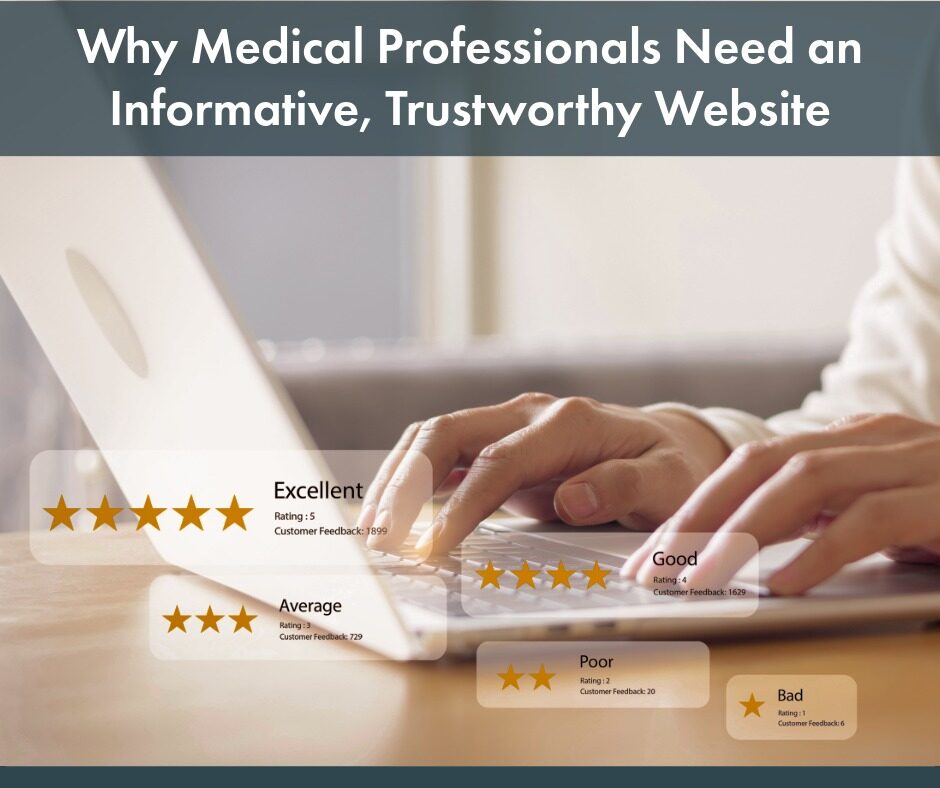
Why Medical Professionals Need an Informative, Trustworthy Website
Your website is more than an online business card—it’s the front door to your clinic.
Whether you’re a surgeon, consultant, physiotherapist, or specialist clinic, patients expect a modern, trustworthy, and informative website that answers their questions before they ever pick up the phone.
As healthcare becomes increasingly competitive and patient expectations continue to rise, having a responsive, well-optimised, and content-rich website is now a fundamental part of professional credibility.
Here’s why having a modern, informative, and trustworthy website matters.
1. First Impressions Count: Trust Starts Online
For most patients, the decision-making journey begins with a Google search. They might be exploring symptoms, researching treatment options, or comparing specialists in the Southwest. When potential patients land on your website, they instantly evaluate:
Professionalism
Expertise
Safety and credibility
Whether you feel like the right fit
A clean, modern, and easy-to-navigate website reassures visitors that they’re in capable hands. Outdated layouts, broken links, or a slow or confusing structure do the opposite—they create hesitation, uncertainty, and distrust.
Your website is often the first clinical interaction a potential patient will have with you. Make it one that reflects the quality of your care.
2. Why Responsive Design Matters More Than Ever
More than 60% of private healthcare searches now happen on mobile devices. Patients expect seamless browsing whether they’re viewing your site on a phone, tablet, or desktop. A responsive website ensures that your pages automatically resize, images load correctly, and navigation remains intuitive.
A non-responsive website isn’t just frustrating—it drives potential patients away.
A responsive website matters because:
Google ranks mobile-friendly websites higher, improving your visibility
Patients research on the go, especially when comparing specialists
Mobile users are more likely to submit enquiries from simple, well-designed forms
Accessibility and readability improve, particularly for older patients or those with visual difficulties
In healthcare, a good mobile experience is no longer a nice-to-have—it’s essential.
3. Good SEO Helps Patients Find the Right Specialist—You
Search Engine Optimisation (SEO) is the backbone of online visibility. Even the most skilled medical professional will struggle to attract new patients if their website can’t be found.
When your website is correctly optimised, it helps you appear in front of people who are actively searching for the services you provide. This includes phrases like:
knee replacement surgeon near me
private rhinoplasty consultation Plymouth
hand surgery specialist Truro
SEO supports your practice by ensuring you show up when it counts.
The key elements of good medical SEO include:
Relevant, authoritative content
Fast-loading pages
Clear site structure
Optimised page titles, meta descriptions, and URLs
Local SEO targeting your exact geographic areas
Clear calls-to-action that guide patients to book or enquire
Healthcare SEO isn’t about ranking for everything—it’s about ranking for the right things.
Feedback:
“This is the first time I’ve had consistent private enquiries without relying on word of mouth. The website feels modern, my content looks professional, and patients often mention finding me online. It’s been a game changer.”
Mr Harris, Consultant Orthopaedic Surgeon.
4. Content Helps Patients Make Informed Decisions
Modern patients are more informed than ever. They want to understand their treatment options, recovery timelines, and what to expect before committing to private care.
This is where high-quality website content becomes powerful.
Great medical content should:
Explain conditions and treatments in easy-to-understand language
Help patients feel confident and prepared
Reduce anxiety by outlining what happens before, during, and after surgery
Position you as an expert who educates, not just sells
Build trust through transparency and clarity
Answer common questions before patients ask them
From blogs and FAQs to treatment pages and downloadable guides, informative content builds a strong connection with patients and increases the likelihood that they will choose you over another provider.
Download your free copy of The Surgeon’s Guide to Digital Marketing – How to Maximise Your Online Presence »
5. A Great Website Improves the Entire Patient Journey
Your website isn’t just a marketing tool—it’s an extension of your patient care.
A well-designed healthcare website helps patients:
Understand your expertise and background
Learn more about treatment options
View before-and-after images (where appropriate)
Access pre- and post-operative instructions
Make informed choices confidently
Contact your practice easily
Know exactly what to expect next
This reduces admin time for your team and leads to better-prepared, more engaged patients.
6. It Reinforces Your Reputation and Professional Standards
Patients want reassurance. A professional website that includes:
GMC or specialist memberships
Hospital practising privileges
Clear contact details
Professional photography
Evidence-based information
Case studies & testimonials
- Before & after photos
…instantly enhances your credibility.
In a world where misinformation spreads easily, having your own trusted online presence ensures that your voice and expertise guide patients—not generic, unreliable medical advice found on forums.
Improve your visibility & increase your patient confidence
A modern, responsive, SEO-optimised, informative website is one of the most valuable assets a medical professional can invest in. It improves your visibility, increases patient confidence, and supports safer, more informed decision-making.
In private healthcare, trust is everything—and trust begins long before a patient walks into your clinic.
If you’d like help creating a professional website tailored to surgeons and healthcare specialists, you can explore more here: www.healthcaremarketingpartner.co.uk/services-page/websites-for-surgeons/
Next steps
Need Expert Marketing Support?
If you’re a surgeon, consultant, or clinic manager looking to grow your private practice, we can help you align your strategy and marketing plan to bring measurable results.